War in the Middle East Advertisement Supported by News Analysis With a Deal Seemingly Close, the U.S. Faces an Iran More Willing to Withstand Pressure Iran’s new, more militaristic leaders have already survived the worst that America and Israel can deliver, and seem readier to take risks.
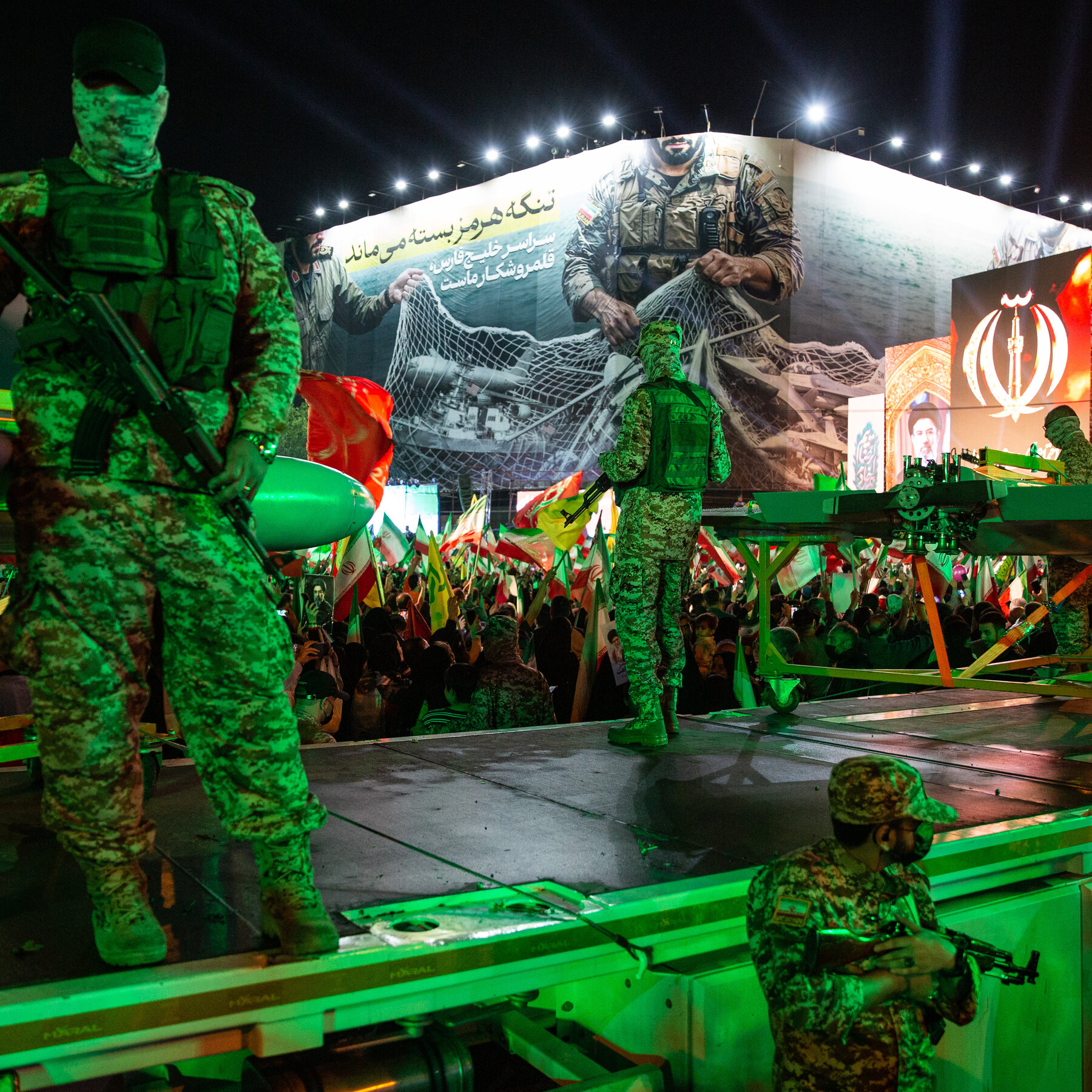
A large crowd with colorful flags fills the background, beneath illuminated billboards. Foreground figures in camouflage uniforms and carrying guns stand on a green stage. Steven Erlanger By Steven Erlanger Steven Erlanger, based in Berlin, has written about Iran and the Middle East for decades.
The United States and Israel went to war in Iran seeking regime change. Nearly four months later, there has been regime change, but not the kind they wanted. The Islamic Republic 3.0, as some call it, is now less a theocracy and more a military junta dominated by the powerful Islamic Revolutionary Guards Corps.
Washington and Jerusalem also went to war to eradicate Iran’s nuclear program and end the threat it poses. So far, this conflict has only produced a wounded Iran more willing to take risks and more likely to persist in its goal of advancing its nuclear program.
The United States and Iran traded blows this past week while trying to find a path toward settling the war. By Friday, despite accusations of duplicity from both sides, officials in Tehran and Washington said they were closing in on an initial agreement, known as a memorandum of understanding.
On Saturday, President Trump announced that the signing would take place on Sunday, though Iran’s foreign ministry publicly cautioned that the timeline could be slower. Even agreement on the memorandum will leave Tehran with some leverage, as the two sides engage in serious negotiations on Iran’s nuclear program and its future role in the Strait of Hormuz.
Many details would be left to a 60-day period for negotiations, which may or may not succeed. In the course of this war, Iran has gone from appearing weak and defenseless to a regime not only surviving, but also retaining important military and nuclear abilities.
Iran’s extensive security apparatus seems firmly in control of all aspects of governing, society and foreign policy. Iran is now led by “a younger, more brazen generation in power,” said Sanam Vakil, the director of the Middle East and North Africa program at Chatham House, in what Aaron David Miller, a former American diplomat at the Carnegie Endowment, called “a transition from divine power to hard power.” We are having trouble retrieving the article content.
Please enable JavaScript in your browser settings. Thank you for your patience while we verify access. If you are in Reader mode please exit and log into your Times account, or subscribe for all of The Times. Thank you for your patience while we verify access.
Already a subscriber? Log in. Want all of The Times? Subscribe. Related Content Advertisement Site Index Site Information Navigation