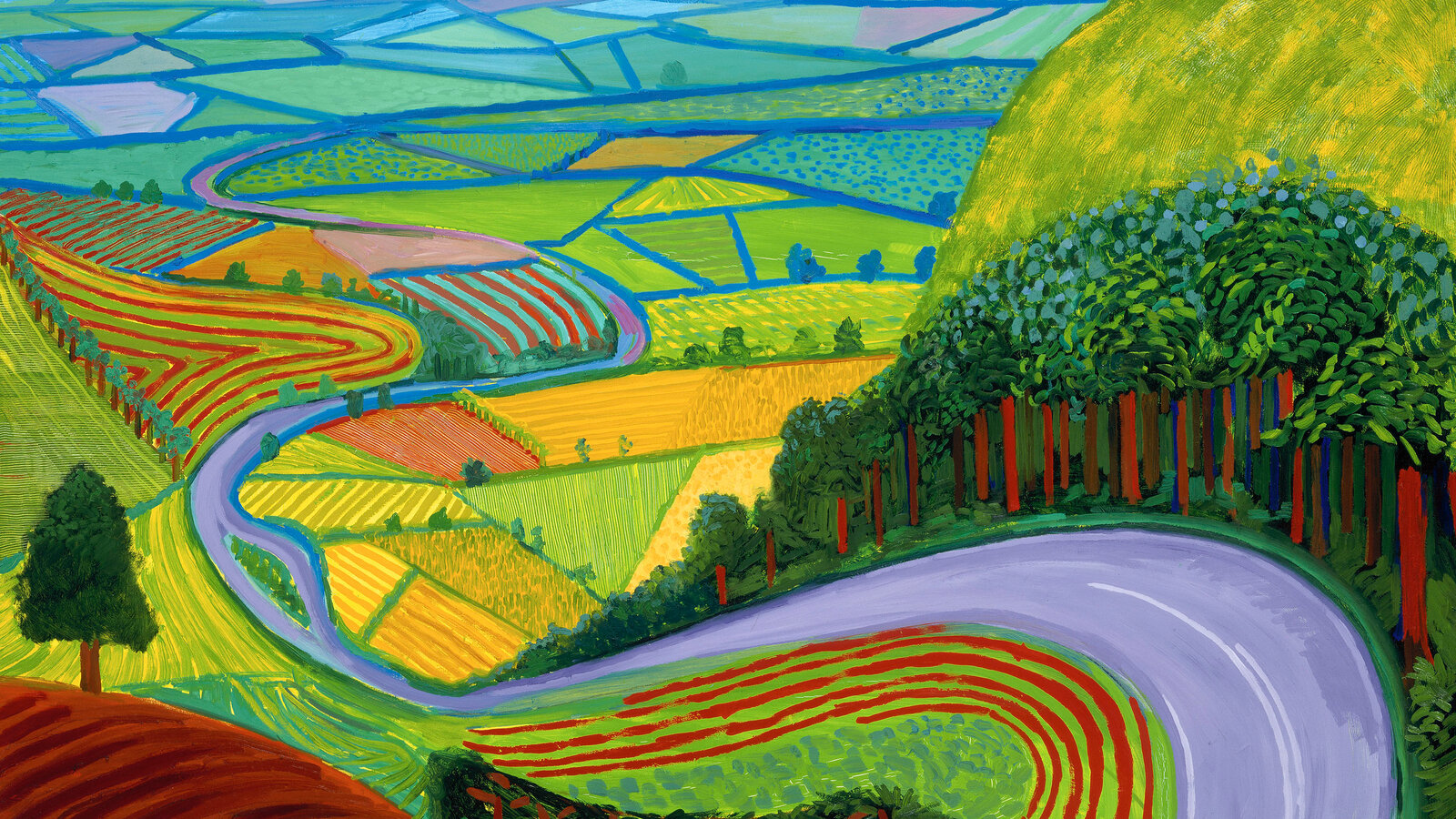
AdvertisementSKIP ADVERTISEMENTYou have a preview view of this article while we are checking your access. When we have confirmed access, the full article content will load.An Appreciation“As important as the boys and the pools and the light,” a memoirist writes, “the most important thing was becoming the driving.” It would inspire an obsession with moving focus into the future.Listen · 10:49 min “Garrowby Hill,” 1998, by David Hockney.Credit...David Hockney; Museum of Fine Arts, Boston and Prudence Cuming AssociatesBy Lawrence WeschlerA staff writer at The New Yorker for 20 years, Lawrence Weschler spoke with David Hockney over almost 45 years, reflected in his 2006 biographical memoir of the artist, “True to Life.”June 13, 2026I first actually met David Hockney in 1982 — the very midpoint of his life and, as things turned out, a decisive fulcrum moment in his career.Of course, I’d long followed his career, starting with his explosively successful debut right out of art school in London in the late ’50s and early ’60s (it’s difficult nowadays to credit the sheer freshness and élan with which he so matter-of-factly expressed his gay inclinations, which were still entirely illegal in Britain at the time).
And then his wordly peregrinations, culminating in his arrival in Los Angeles, when he quickly helped we longtime residents to start seeing again, as if for the first time: the pools, the palms, the sprinklers, the building facades, the sky and that light!He was regularly showing up in the social pages of the papers, a veritable flâneur, his love life (achingly chronicled in his drawings and paintings) an object of public fascination.
I imagined I knew him, though almost all of my preconceptions would now quickly be upended.For starters, the facade of easygoing dandyism. I somehow had grown to imagine him as almost always out partying or else lollygagging on extended vacations. On the contrary, I grew to realize, he was one of the hardest nose-to-the-grindstone art workers I’d ever encountered.Image“Le Parc des Sources, Vichy,” 1970.Credit...David HockneyAll those images of him lazing about (St.
Tropez, China, Malibu): He was working the entire while, prolifically generating the very images that promoted the illusion. Think for instance of “Le Parc des Sources, Vichy” (1970), that magnificent painting of two seated friends gazing out into a pair of receding tree lines in a French spa, flanked by a third empty chair (which would have been his, except he’d gotten up to ever so painstakingly record the scene).Thank you for your patience while we verify access.
If you are in Reader mode please exit and log into your Times account, or subscribe for all of The Times.Thank you for your patience while we verify access.Already a subscriber? Log in.Want all of The Times? Subscribe.AdvertisementSKIP ADVERTISEMENT